Inspiring Outdoor Kitchen Ideas: Design, Innovation & Best Practices
An outdoor kitchen transforms your backyard into a culinary and social destination. But creating one that’s practical, durable, and beautiful takes more than placing a grill outdoors. This guide explores outdoor kitchen ideas in depth: layout and design principles, technology enhancements, real-world examples, benefits, use cases, and FAQs.
Design Foundations for Outdoor Kitchen Ideas
Planning Layout and Functional Zones
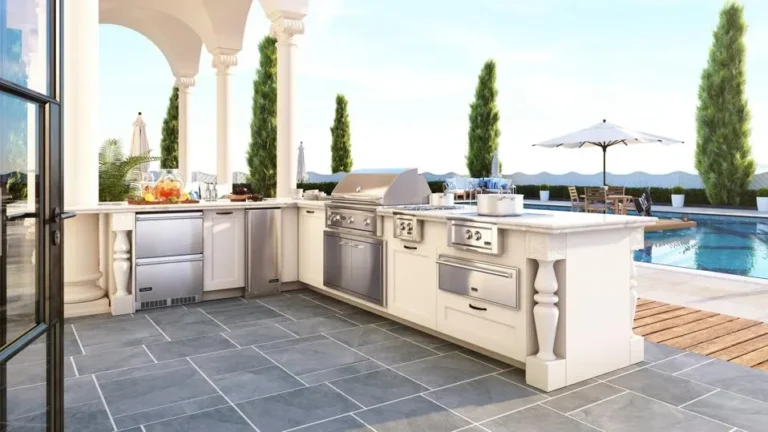
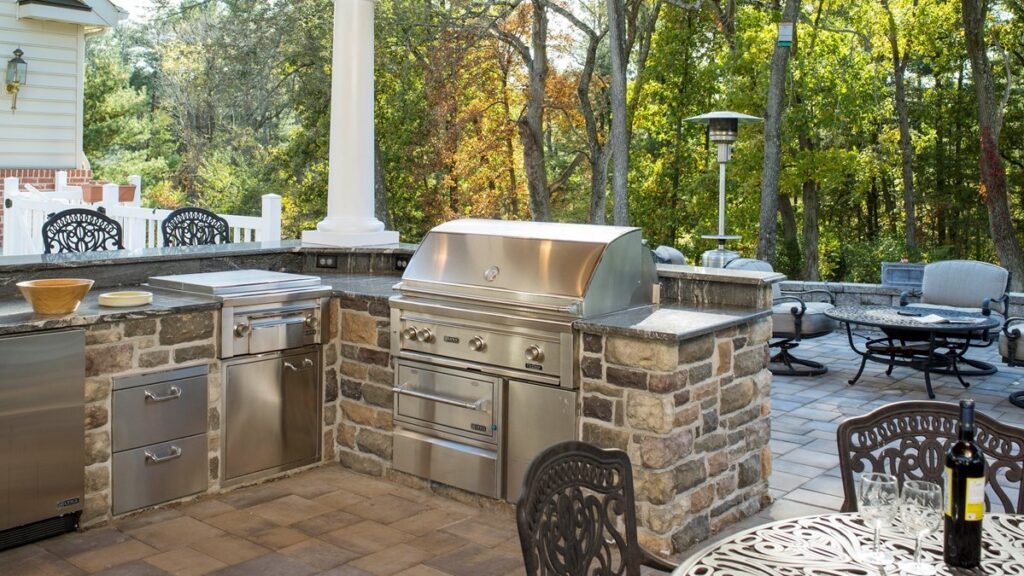
Every outdoor kitchen begins with a thoughtful layout. You should define zones that support a logical workflow: cooking, preparation, cleaning, serving, and storage. The “kitchen triangle” concept (grill, prep space, sink) still applies outdoors, though you may also include beverage or bar zones, pizza oven stations, or seating zones near the kitchen.
The layout must account for outdoor constraints: prevailing wind direction (to avoid smoke blowing into seating), sun path (for shade and glare control), drainage (slopes to shed water), and safety (clearances around heat sources). Also, integration with adjacent elements (pool, patio, pathway) is essential so the kitchen feels cohesive rather than tacked on.
Another important design idea is modular or phased expansion: begin with a core cooking module, with “plug-and-play” capacity to add a sink, side burners, or refrigeration later. This lets outdoor kitchen ideas adapt as the budget or use grows.
Materials, Finishes & Durability
Outdoor kitchens face harsher conditions than indoor ones: sun, rain, humidity, insects, and fluctuating temperatures. So selecting durable, weatherproof materials is key. Some popular choices in modern outdoor kitchen ideas include:
-
Stainless steel for appliances and cabinet exteriors: corrosion-resistant and easy to clean
-
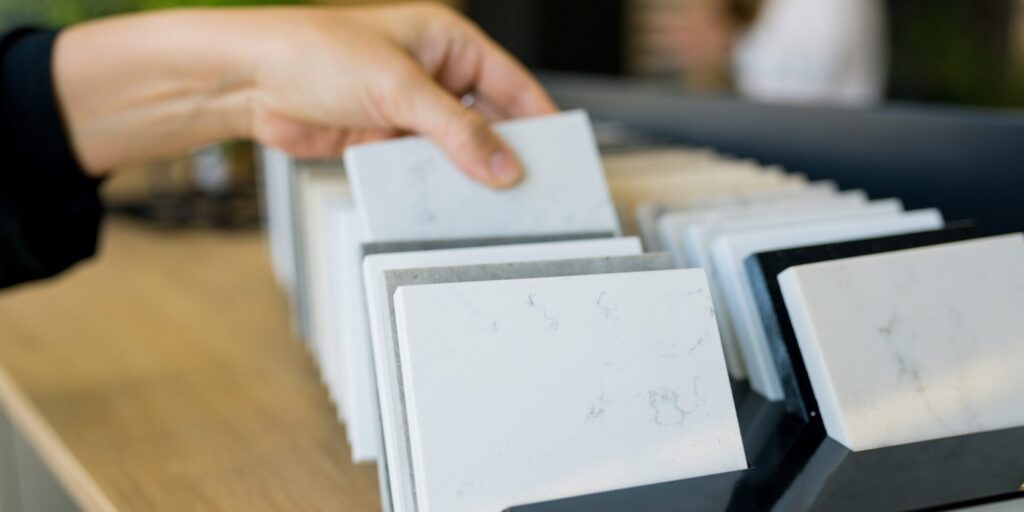
Stone, granite, or sintered stone for countertops: they resist heat, stains, and weathering
-
Refractory brick or fire-rated masonry around grills or pizza ovens for heat containment
-
Fiber cement, porcelain panels, or weather-rated composites for cabinet facades
-
Sealed natural stone or tile backsplashes to protect supporting walls
-
Proper waterproofing, flashing, and overhangs to reduce water intrusion
-
Integrated drainage channels and slope design beneath counters to avoid standing water
In outdoor kitchen ideas, the way materials meet is as important as the selection: joints should be sealed, connectors protected, and transitions detailed so water doesn’t seep in.
Integration with Landscape & Aesthetics
To make an outdoor kitchen feel like part of its environment, you should weave it into the existing landscape and site conditions. Some ideas:
-
Use plantings or trellises to soften hard edges
-
Place the kitchen near garden beds or herb planters to echo greenery
-
Use similar materials to the home’s exterior to create continuity
-
Incorporate overhead structures (pergolas, shade sails, retractable roofs) for sun protection
-
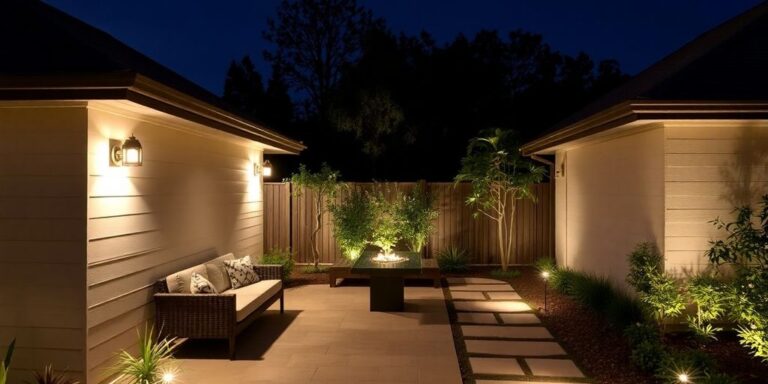
Use lighting, vertical elements (screens, trellises), and ambient features (fire pits, water features) to set the mood
Good outdoor kitchen ideas don’t treat the kitchen as a stand-alone box; they see it as part of the whole outdoor living ecosystem.
Technology & Innovation in Outdoor Kitchen Ideas
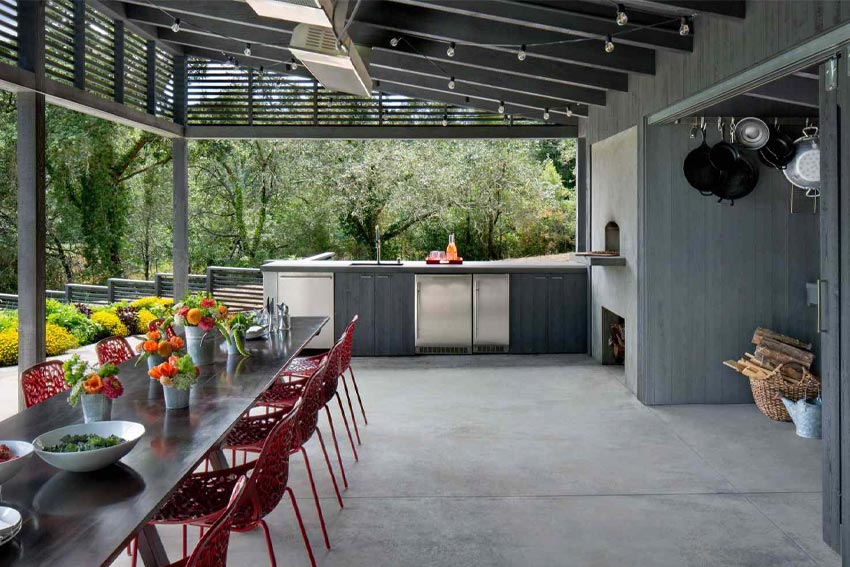
Outdoor kitchens are becoming smarter and more adaptive, incorporating advanced tech and modular systems. Below are some key innovations and how they enhance design.
Smart Controls & Automated Features
Modern outdoor kitchen ideas include integration of smart controls, grills with thermostatic settings, automated ignition, remote temperature sensing, and app-based monitoring. Lighting, fans, heaters, or shade structures can also be linked to sensors and home automation systems to respond to changing conditions.
For example, retractable pergola louvers might automatically tilt when cloud cover changes or rainfall begins, protecting appliances and users. Motion-sensor lighting or path lights turn on as dusk falls, enhancing safety and ambience.
Modular & Prefabricated Systems
Many of today’s outdoor kitchen ideas rely on modular cabinets and plug-in modules, sink modules, grill modules, and refrigeration modules that fit into frame systems. These prefabricated systems reduce site labor, allow precision in factory finishes, and simplify later upgrades. Some modules include integrated wiring, plumbing paths, and structural anchoring.
These modular approaches make outdoor kitchen ideas more accessible and scalable, especially for DIY or phased implementation.
Materials & Fabrication Advances
Advances in materials improve outdoor kitchen resilience and aesthetics:
-
Sintered stone and ultra-compact surfaces: nearly non-porous, fade-resistant, and heat-tolerant
-
High-pressure laminate (HPL) panels with UV stabilization for cabinet exteriors
-
Fiber-reinforced polymers or engineered concretes for custom shapes without heavy weight
-
Corrosion-resistant hardware and fasteners (316-grade stainless, coated alloys)
-
Prefinished powder-coated metal cladding with durable coatings
These innovations allow outdoor kitchen ideas to push aesthetic boundaries while maintaining longevity.
Climate-Responsive Design
In climates with rain, wind, or sun variations, outdoor kitchen ideas now often include:
-
Shade systems (awnings, pergola roofs, screens)
-
Retractable water protection (retractable roofs, sliding panels)
-
Infrared or electric heating elements for cooler evenings
-
Ventilation channels or heat-exhausting paths behind ovens or grills
-
Smart sensors to retract/cover when conditions change
These climate-responsive features help maintain usability year-round and protect system integrity.
Real-World Examples & Use Cases
Here are four real-world products/use cases that illustrate creative and functional outdoor kitchen ideas. Each is described in detail and shows how the concept applies.
Charlie Island Cabinet
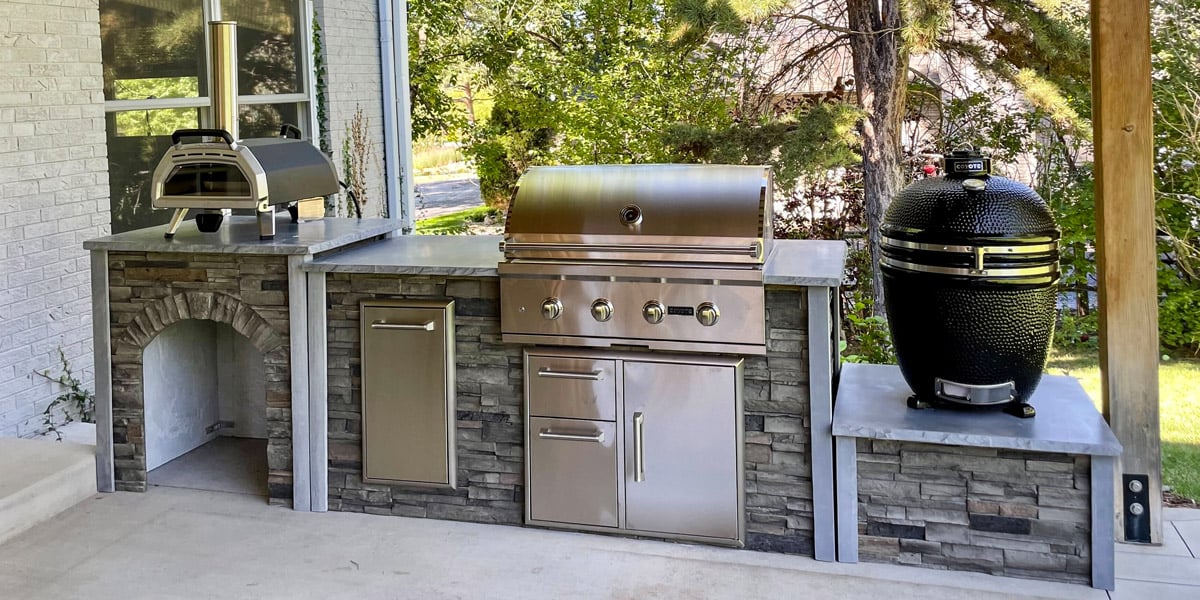
The Charlie Island Cabinet is a prefabricated outdoor kitchen island shell. It provides a structural core to house grill modules, storage, and bench space. Its modular frame allows homeowners or installers to drop in appliances, sinks, or accessories. It demonstrates how outdoor kitchen ideas can standardize the base structure, reducing custom fabrication costs. Because it’s a central “island,” it also suggests conversational layouts (seating around two sides) while allowing plumbing and utility access underneath.
Camping Outdoor Kitchen Folding Set
This is a folding, portable outdoor kitchen station designed for camping or temporary setups. While not a full fixed kitchen, it embodies one of the core outdoor kitchen ideas: flexibility and portability. For small yards or occasional use, such a folding module can serve as the cooking and prep zone without permanent infrastructure. It shows how outdoor kitchen ideas can scale down and adapt to nontraditional environments.
Brand‑Man 6‑Burner Gas Outdoor Kitchen Grill Island
The Brand-Man 6-Burner Grill Island is a heavy-duty outdoor cooking unit with side burners, a large grilling surface, and stainless steel construction. It serves as the heart of many outdoor kitchen ideas. Its size supports serious grilling, while built-in features (side burners, multi-burner layout) reduce the need for additional modules. It’s a core example of how a robust cooking engine can anchor a full outdoor kitchen plan.
Modular Kitchen Tall Pizza Oven MKPO
This modular pizza oven unit is designed to be part of a larger outdoor kitchen configuration. It illustrates how specialty cooking appliances (wood-fired pizza ovens) become integrated outdoor kitchen ideas rather than add-ons. The oven module can align next to grill modules or side cabinets so the user retains flow and consistency in the overall kitchen layout. Its height and thermal demands are more challenging, but when integrated properly, it elevates the kitchen’s versatility and appeal.
Each of these examples shows a different dimension: structural module, portability, core cooking power, and specialty appliance. Good outdoor kitchen ideas use such modules as building blocks, not isolated pieces.
Benefits & Practical Advantages
Adopting thoughtful outdoor kitchen ideas yields many advantages, beyond just visual appeal. Here are the major benefits, explained in depth:
Enhanced Lifestyle & Outdoor Living
An outdoor kitchen makes cooking outside seamless. Rather than shuttling back and forth to the indoor kitchen, you can prep, cook, serve, and socialize in the same space. This transforms casual gatherings into immersive outdoor experiences. You gain a fully functional living space under the sky, bridging seasons and enabling more time outdoors.
Boost to Property Value & Market Appeal
Well-executed outdoor kitchens are seen as premium features. In climates where outdoor living is practical, buyers often view them as desirable amenities. A thoughtfully designed outdoor kitchen can increase perceived usable square footage and thus enhance resale appeal. When integrated seamlessly into landscaping and architecture, it can become a strong selling point.
Efficiency & Operational Convenience
By consolidating cooking, cleaning, and serving in one outdoor zone, you reduce interior heat gain, odors, and foot traffic inside the house. Other benefits include better ventilation of smoke and grease, and less stress on interior HVAC systems. Outdoor kitchen ideas that plan utility connections (water, gas, wiring) reduce ad-hoc extension runs and potential failures.
Durability & Low Maintenance
Choosing weatherproof materials and detailing carefully reduces long-term maintenance. Surfaces that resist staining, fading, and corrosion age more gracefully. When outdoor kitchen ideas incorporate drainage, proper flashing, protected joints, and accessible hardware, the system remains easier to repair and maintain over time.
Scalability & Flexibility
Modular outdoor kitchen ideas allow gradual expansion. Start with the essential (grill, counter) and add features like sinks or refrigeration later. This reduces upfront cost and allows adaptation to changing family needs or tastes. The system remains upgradable rather than fixed.
Resilience & Climate Adaptation
In regions with variable weather, outdoor kitchen ideas that include climate-responsive features (shade, retractable covers, ventilation) help maintain usability and protect appliances. The kitchen can better endure humidity, heat, rain, or seasonal shifts and maintain function.
Use Cases: How Outdoor Kitchen Ideas Solve Real Problems
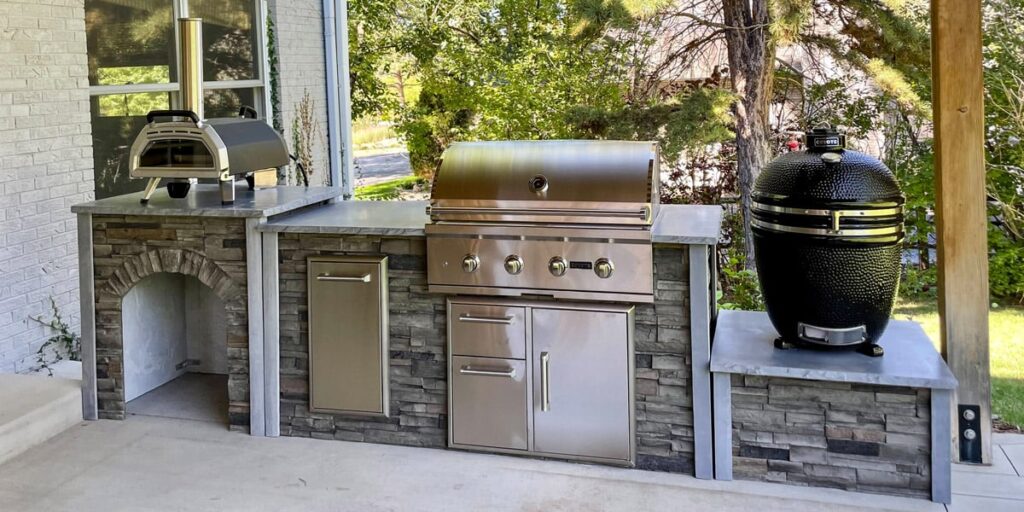
To ground theory in practice, here are real-life scenarios and how outdoor kitchen ideas address them:
Use Case 1: Compact Yard or Patio
Problem: Limited space prevents a full L-shaped or U-shaped kitchen.
Solution: Use linear modules or narrow islands, compact specialty units (folding tables), and vertical stacking for storage. Outdoor kitchen ideas here emphasize minimal footprint, modular expansion, and multifunctional units (e.g., sink + prep surface in one). This allows small yards to host functional kitchens without overwhelming the space.
Use Case 2: Rainy or Wet Climate
Problem: High rainfall threatens appliance durability, and use is limited in wet weather.
Solution: Outdoor kitchen ideas include covered or semi-covered structures (pergolas, retractable roofs), sealed materials, water-shedding slopes, and drainage. Appliances and module fronts are designed to shed water, and sensitive elements are shielded. The kitchen remains usable year-round without deterioration.
Use Case 3: Entertaining & Social Hosting
Problem: Need for simultaneous cooking, interaction, and serving.
Solution: Outdoor kitchen ideas promote open island layouts, bar seating facing guests, lighting, and utility placement that keeps the cook connected. Zones are arranged so that serving flows smoothly, and hosts don’t feel isolated. Integrated beverage stations or pizza ovens help diversify food offerings without crowding.
Use Case 4: Phased Construction / Budget Constraints
Problem: The Budget doesn’t allow building a complete, full-featured outdoor kitchen up front.
Solution: Modular outdoor kitchen ideas help phase the build: start with grill + cabinet, leave blank modules for sink or refrigerator later. Infrastructure (gas, water, wiring) is stubbed in early, so future installation is simpler. This keeps design integrity while spreading cost over time.
Use Case 5: Specialty Cooking Needs
Problem: Want to integrate unique appliances like a wood-fired pizza oven or smoker.
Solution: Outdoor kitchen ideas incorporate specialized modules sized and ventilated appropriately. The modular approach allows aligning these elements adjacent to general cooking zones, maintaining workflow. The vertical heat exhaust, materials around them, and integration logic must be handled carefully, but when done, they elevate versatility and wow factor.
Frequently Asked Questions
Q1: How do I size my outdoor kitchen layout?
Start from the “work zones” grill, prep space, sink, and serving. Leave adequate clearance around the grill (at least 36–48 inches). Aim for a minimum depth of 2 ft (60 cm) on counters, and modular widths that allow appliance integration (e.g., 24”, 30”, 36” modules). Consider flow to adjacent dining, seating, or pathways. It’s better to oversize slightly than to crowd.
Q2: What utilities are required for an outdoor kitchen?
At minimum: gas line for the grill (or fuel source), plumbing for sink, and electrical power for lighting, refrigeration, or outlets. You may also require drainage, ventilation for ovens or smokers, and wiring conduits for future expansions. Design outdoor kitchen ideas with stubbed infrastructure so adding features later is easier.
Q3: How can I protect my outdoor kitchen from pests, weather, and wear?
Use tight seals, weather-rated materials, covers, and proper drainage. Keep cabinet doors closed and sealed. Use screened vents or filters to block insects. Apply UV-stable coatings and schedule periodic maintenance (clean seals, inspect joints). Use protective covers when idle. Design shade and roofing protection to reduce direct exposure.