Modern Outdoor Patio Designs: Trends, Tips & Inspiring Ideas
Outdoor patios offer an opportunity to extend living space into the open air. Well-designed patios are not just decorative; they function, endure, and contribute to lifestyle. In this article, we explore modern outdoor patio designs in detail: principles, materials, technologies, real inspirations, benefits, use cases, and FAQs.
Core Principles of Modern Outdoor Patio Design
Spatial & Functional Layout
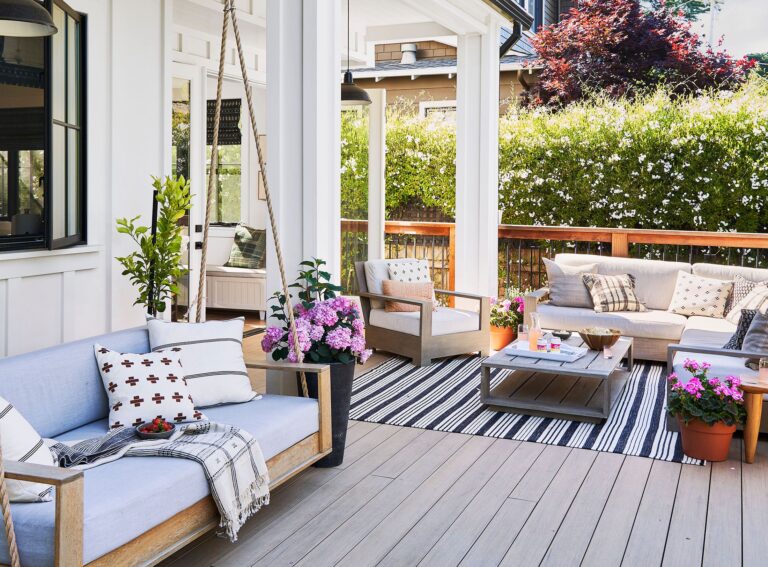
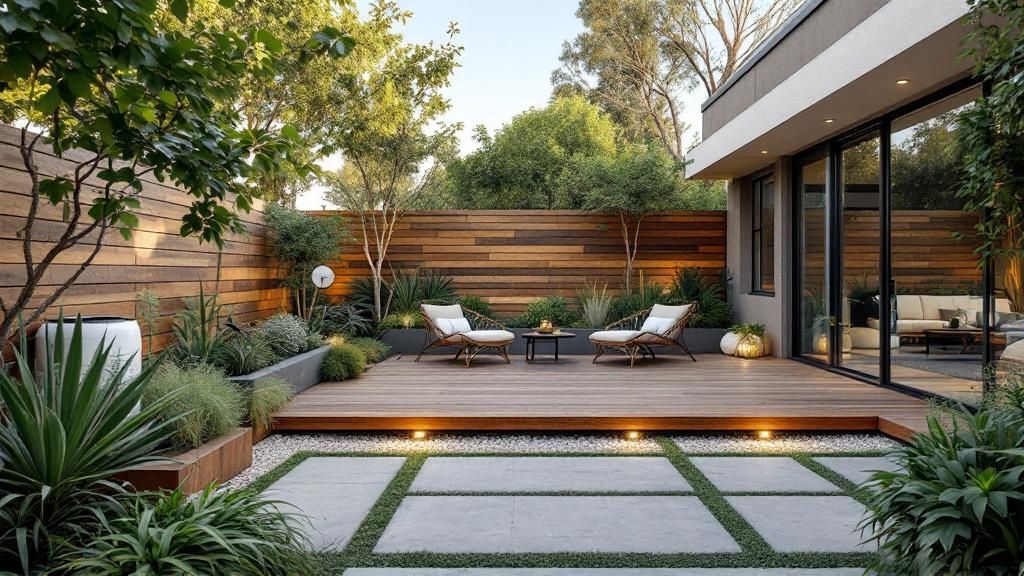
Designing a modern outdoor patio begins with careful layout planning. The space should accommodate zones: lounging, dining, circulation paths, and possibly cooking or fire features. The relationships among these zones matter: the dining zone should connect with indoor kitchens, lounging should face views or focal points, and traffic flow should avoid disrupting seating.
Modern design often embraces open geometry, clear sightlines, and continuity with the surrounding environment. This means patios frequently align with the home’s lines, use extensions of existing floors, or blur the boundary, such as through sliding doors or level flooring transitions. The layout must also allow for utility needs: water runoff, drainage slopes, and structural load if overhead elements (pergolas, roofs) are included.
Choice of Materials & Surfaces
Outdoor patios must withstand weather, wear, and maintenance challenges. Contemporary designs lean toward durable, low-maintenance materials with aesthetic appeal:
-
Large-format pavers, porcelain slabs, or polished concrete provide clean, smooth surfaces with fewer joints.
-
Wood-look porcelain or fiber cement decking gives warmth without the upkeep of natural wood.
-
Natural stone (slate, granite, bluestone) adds texture and a premium feel, often used as accents or focal zones.
-
Composite decking, eco-friendly composites, or recycled materials provide sustainability while retaining performance.
-
Gravel, decomposed granite, or permeable surfaces may be used to manage drainage and soften transitions.
-
Accent materials like wood slats, vertical screens, and metal or corten steel planters provide contrast and structure.
Choosing materials means balancing aesthetics, durability, slip resistance, climate compatibility, and maintenance needs.
Integration with Landscape & Environment
A modern patio design must respond to its environment. It doesn’t exist in isolation. Thoughtful integration includes:
-
Aligning the patio’s shape and materials with the garden beds, trees, or natural contours.
-
Using vertical elements (screens, trellises) to anchor the patio and reduce harsh edges.
-
Providing shade through pergolas, sail shades, or overhangs to moderate sun exposure and comfort.
-
Selecting plantings that buffer wind or frame views.
-
Ensuring transitions (steps, level changes) flow naturally and safely.
Good outdoor patio design becomes a stage for outdoor life in a visual dialogue with nature and architecture.
Technology & Innovation in Outdoor Patio Design
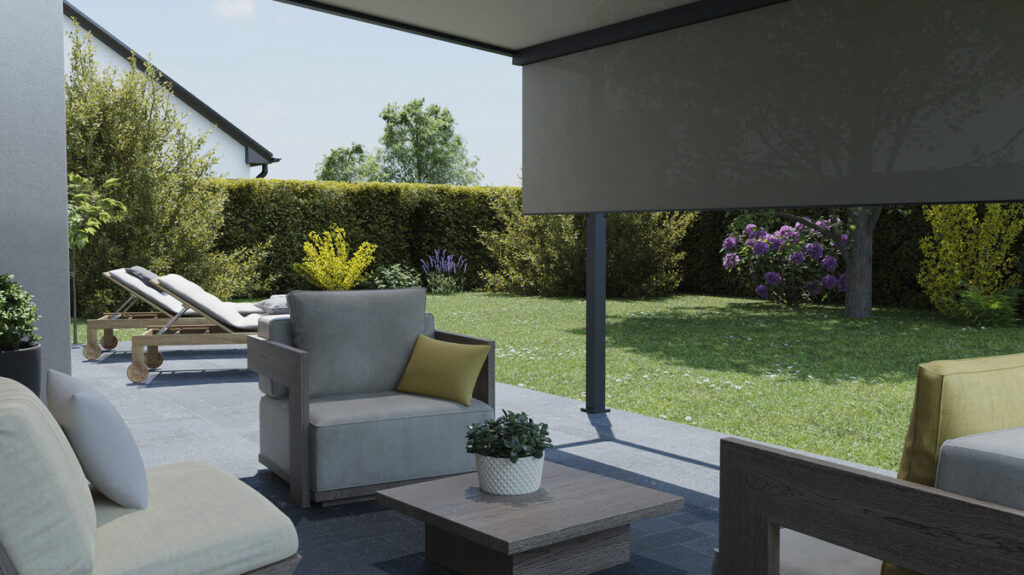
Modern patio design increasingly benefits from technological advances. These innovations improve flexibility, comfort, and sustainability.
Smart Shade, Light & Environmental Control
Patios today often include smart shading systems, automated retractable awnings, pergola louvers with motors reacting to sun angle or wind sensors, or shade sails that adjust. These systems allow patios to stay usable under varying weather conditions without manual intervention.
Lighting technology is also evolving: integrated LED strips, color-tunable lighting, motion sensors, and app-based control let designers choreograph ambience. RGB LEDs or warm-tone arrays can shift the mood from daytime to evening seamlessly.
Weather sensors can control when elements retract or extend. For example, an awning can retract in strong wind or heavy rain, protecting the installation’s durability.
Prefab & Modular Construction
Modular patio kits or prefabricated pergola/patio systems make design and installation more efficient. Modules (panel systems, connectors, beam kits) allow scalable customization. These systems often include hidden wiring conduits, anchor points for lighting or shade, and structural rigidity engineered ahead of site work.
These prefabricated components reduce labor time, simplify complex joints, and allow flexible reconfiguration down the road.
Simulation, Visualization & Material Testing
Before construction, designers now use 3D rendering, AR/VR previews, and simulation tools to test shadow behavior, sightlines, and material combinations. They can visualize how light changes through the day, see how textures contrast, and preview plants in situ. This reduces guesswork and helps clients commit with confidence.
Material testing labs or on-site mockups allow evaluating how surfaces weather local conditions sun, rain, humidity, and freeze-thaw cycles. Designers can preempt failure or aesthetic drift.
Inspiring Examples & Use Cases
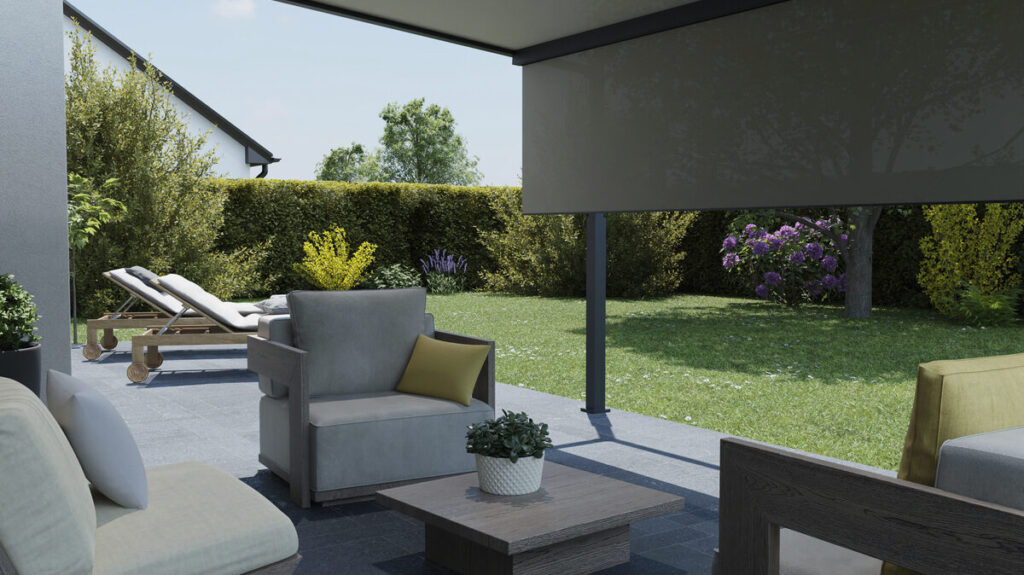
Below are four real-world outdoor patio design examples or prototypical products, each illustrating a distinct approach or innovation. For each, I explain its attributes and relevance to modern outdoor patio design.
Outsunny 7‑Piece Patio Wicker Conversation Set
This high-quality modular outdoor furniture set demonstrates how modern patio design often treats furniture not just as add-ons but as integral elements. The clean lines and neutral tones of this wicker set align with modern design aesthetics, providing seating that complements rather than competes with the architecture. Because it’s modular, it can adapt to various patio footprints. In a modern patio, such a furniture set becomes central to the lounging zone, helping define space without walls.
Gardeon 3‑Piece Wicker Outdoor Furniture Set
This compact set is ideal for smaller patios or transitional areas. It shows how modern patio designs can incorporate minimalist furniture scales without compromising style or comfort. On a patio that tucks into narrow corners or near landscaping edges, such scaled furniture offers functionality without overwhelming the space.
Askholmen Outdoor Bench
This bench exemplifies Scandinavian-modern simplicity. A bench like Askholmen, when placed along a border edge or under a pergola, provides seating and becomes part of the architectural rhythm. Its design language, straight lines, light wood or painted surfaces, echoes modern patio geometry. It can be used to anchor a garden interface or frame a fire pit zone.
Wisteria Lane 4‑Piece Patio Furniture Set
This set shows how modern patio design can integrate comfort and visual continuity. Its neutral palette and balanced proportions work well on patios with stone or paver surfaces. In design, analogous sets help maintain coherence in layout zones (e.g., dining, lounging) without jarring style shifts.
Each example above contributes to modern outdoor patio design by offering modular, style-compatible, and functional furnishing options. They are not standalone showpieces but elements that tie into the patio’s aesthetic, layout, and use.
Benefits & Practical Advantages
Modern outdoor patio design delivers tangible benefits beyond aesthetics. Below are detailed advantages and how they manifest in real use.
Extending Living Space
A thoughtfully designed patio serves as an extension of the home’s outdoor living rooms. This means that in favorable weather, the patio becomes a go-to zone for reading, relaxing, dining, or entertaining. When layout, materials, lighting, and comfort (shade, heating) are addressed, the patio functions as a true ‘room’ under the sky.
Improved Property Appeal & Value
High-quality patios can boost resale value. Buyers often look favorably upon usable, durable, attractive outdoor spaces. A modern patio with integrated lighting, well-chosen materials, and functional zones signals attention to detail and care, making properties more desirable.
Climate Control & Comfort
Patios can mediate sun, wind, and temperature exposure. Shade structures, appropriately oriented hardscapes, and smart elements reduce heat inside adjacent interiors by shading windows and absorbing less direct sun. The outdoor comfort includes protection from glare, wind buffering, and evening usability through lighting and heating.
Low Maintenance & Durability
Modern patio designs emphasize materials and detailing that last. By selecting weather-resistant surfaces (porcelain, large slabs, composite decking), well-sealed joints, hidden drainage, and durable fixture attachments, maintenance is minimized. Over time, these choices preserve appearance and reduce repair needs.
Flexibility & Adaptability
With modular components and prefabricated systems, patios can evolve. You may start small and expand by adding a pergola, reconfiguring seating, or integrating smart shade systems later. The design can adapt to changing needs without a full rebuild.
Environmental & Water Management Benefits
Modern patio surfaces often include permeable or semi-permeable pavers, letting rainwater infiltrate rather than run off. Landscape integration with plantings and retention features helps water absorption. Additionally, the use of sustainable materials and recycled products reduces the environmental footprint.
Use Cases: Real Problems & Design Solutions
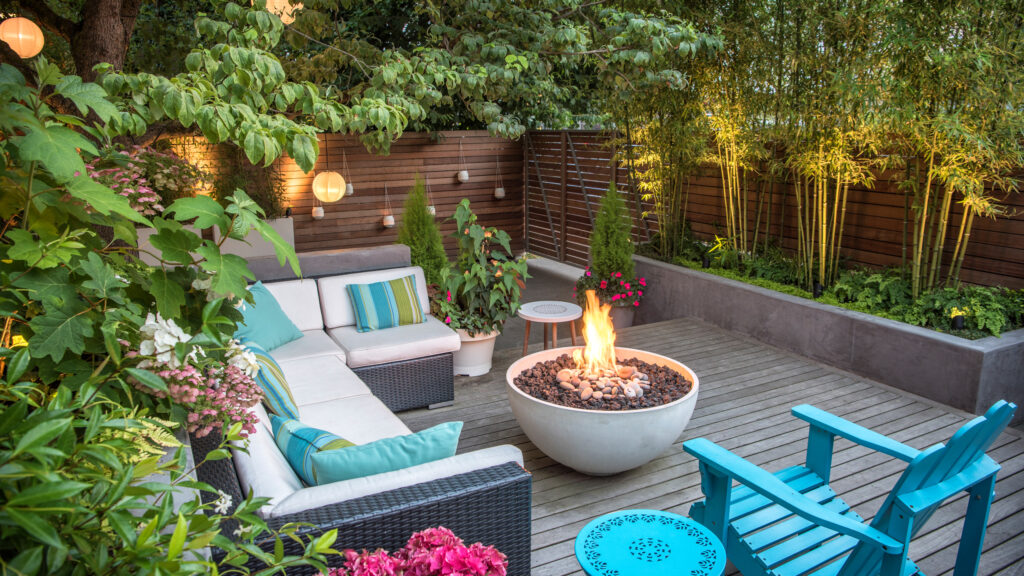
Here are four use cases where modern outdoor patio design solves real challenges, with an explanation of how and why they work.
Use Case 1: Small Urban Backyard
Problem: Limited footprint, surrounding walls, tight setback.
Solution: Use modular furniture, linear layouts, and vertical screening to maximize usability. Use large-format pavers to reduce visual clutter. Orient seating toward focal points (view, garden, sculpture). Incorporate retractable shading or a pergola to allow coverage without bulk. This solves space constraints while creating a unified, elegant outdoor zone.
Use Case 2: Hot, Sunny Climate
Problem: Intense sun, heat midday, glare, surface heating.
Solution: Use shade structures (fixed pergola, motorized louvers), high-reflectance or lighter-tone paving, vertical walls or screens to block solar angles, and integrate cooling features (misting, fans). Choose materials that resist heat (porcelain, natural stone) rather than dark absorptive surfaces. The result is a patio that remains usable and comfortable even under harsh sun.
Use Case 3: Entertaining & Social Gatherings
Problem: Hosting dinners, parties, events requiring multiple zones (cooking, mingling, seating).
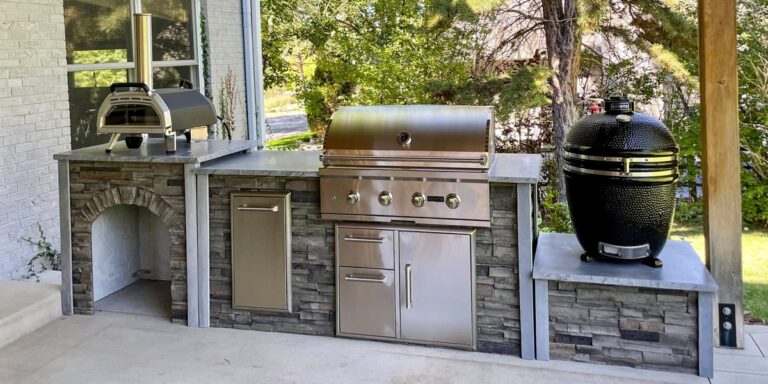
Solution: Segment the patio into distinct but connected zones: dining, bar or beverage area, lounge, and circulation paths. Use level changes or subtle elevation shifts to demarcate zones. Provide lighting, integrated shade, and ample space for movement. The problem of “crowding” is addressed by flow planning and functional zoning.
Use Case 4: Transitioning Indoor–Outdoor Experience
Problem: Disconnect between interior and exterior, visual incongruity.
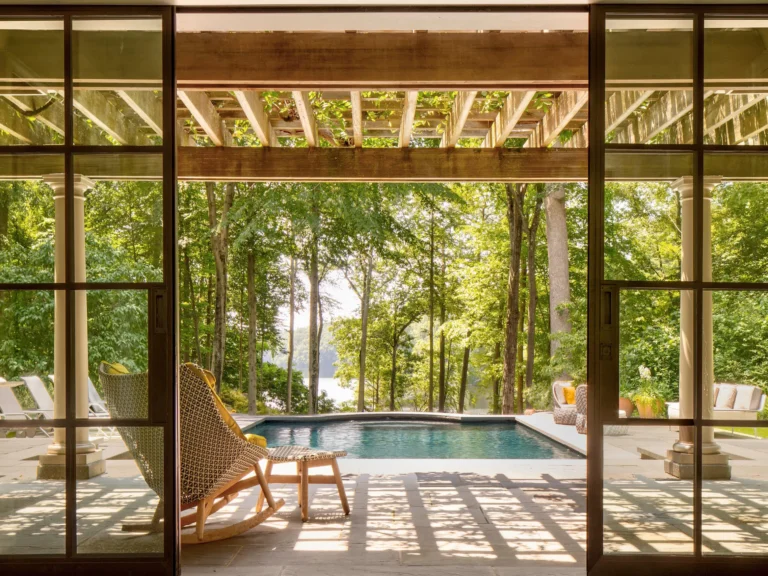
Solution: Align flooring materials or patterns between indoor and patio, extend roof overhangs, and use large sliding or folding glass walls. Incorporate continuity in textures, color palette, and lines. This makes the patio feel like part of the home. It solves the jarring transition and makes the outside feel like an added interior.
Use Case 5: Seasonal Use in Variable Climate
Problem: Patio under-utilized during rainy or cooler seasons.
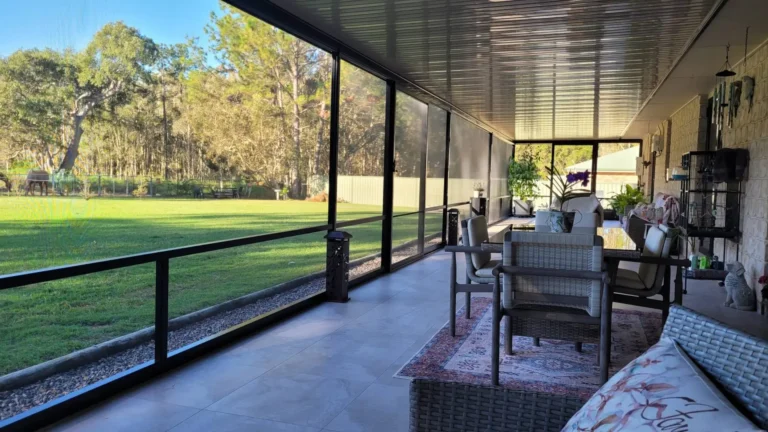
Solution: Incorporate retractable roofs, window screens, heaters, windbreaks, or partially enclosed structures that can expand or contract. Use durable surfaces rated for moisture or freeze-thaw cycles. The patio remains resilient to weather changes and usable beyond ideal conditions.
Frequently Asked Questions
Q1: What is the ideal flooring material for a modern patio?
It depends on climate and use, but large-format porcelain slabs, polished concrete, natural stone (slate, basalt), or high-durability composites are excellent because they minimize joints, resist wear, and offer aesthetic flexibility. Always consider slip resistance and weather compatibility in your locale.
Q2: How can I make my patio usable in more weather conditions?
Incorporate shade (pergolas, retractable awnings), heating elements (infrared heaters, fire features), wind screens or screens, and proper drainage. Smart shade control systems and sensors enhance usability by automating protection. Materials should be weather-tolerant, and structures must be built to handle loads and drainage.
Q3: Can I design a patio that evolves?
Yes. A smart approach is to use modular furniture, prefabricated pergola systems, and expandability in your layout. Start with key zones (lounge, dining), leave stubbed connections (power, structural supports) for future additions, and choose materials consistent across initial and future phases.