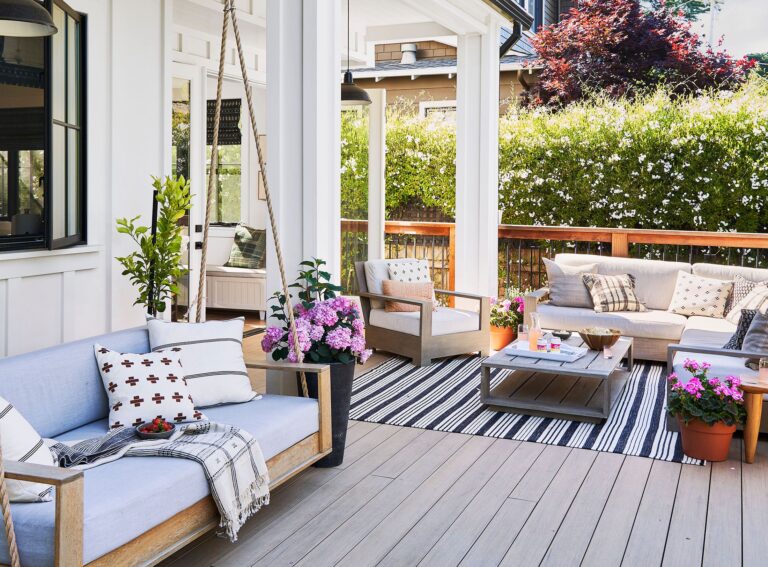
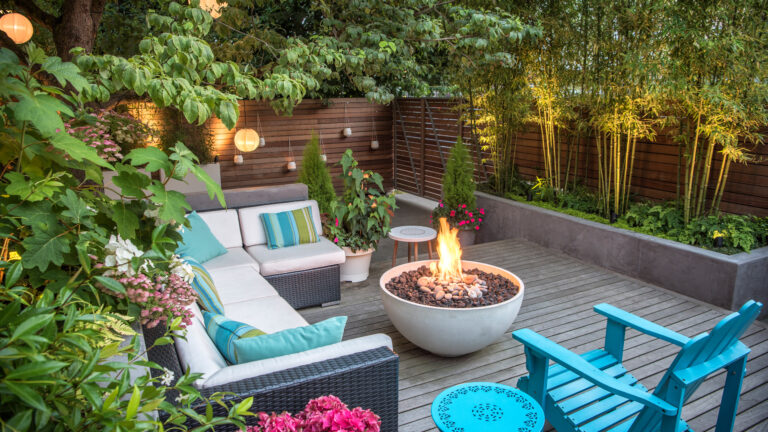
Patio Design Mastery: Concepts, Trends & Inspiring Ideas
A well-designed patio blends comfort, durability, and aesthetics to create an outdoor living extension. Whether you want a cozy lounge, dining setup, garden interface, or multi-function space, good patio design is the foundation. In this guide, we explore core principles, emerging technologies, inspiring examples, benefits, use cases, and FAQs to help you design a patio that’s both functional and beautiful.
Fundamentals of Patio Design
Site Assessment & Contextual Response
The first step in creating an effective patio design is to assess the site and its context. Consider the slope, drainage flow, sun paths, prevailing winds, soil conditions, root zones of nearby trees, views, and relationship to the house. A patio that ignores these constraints often leads to poor performance, ponding water, excessive heat, poor circulation, or abrupt transitions.
Smart patio design respects the context. For instance, on sloped terrain, terraced or multi-level patios help manage elevation changes. In hot climates, the orientation and shade structure become critical for positioning seating to avoid harsh midday sun or use pergolas, louvers, or shade sails. In narrow or constrained plots, linear patios or modular zones can maximize usable area without crowding.
Layout, Zoning & Flow
A successful patio design organizes space into functional zones such as lounging, dining, conversation, cooking, or circulation and ensures smooth flow between them. The relationship of these zones depends on how the patio is used. For example, the dining zone should be adjacent to the kitchen or indoor access, while a lounge area might be more secluded or oriented toward views.
The arrangement must allow for circulation paths that don’t interrupt activity. In modern patio design, designers often use changes in paving pattern, material, level, or planting bands to subtly guide movement. This maintains openness while clarifying how people should move.
Another consideration is scale: furniture, paving modules, planters, and transitions should all be proportioned so they feel comfortable, not too cramped or overly vast. Good design ensures that distances from seating to edges or walkways feel natural.
Materials, Surfaces & Detailing
Because patios are exposed to the elements, choosing materials wisely is essential. A great patio design selects durable, weather-resistant surfaces with appropriate finishes and detailing:
-
Pavers (stone, concrete, brick): robust, familiar, and customizable. Use larger formats or modular pavers to reduce joints and visual busyness.
-
Porcelain / sintered stone slabs: low absorption, high stain and UV resistance, clean modern aesthetic.
-
Stamped/stained concrete: cost-effective but only as good as the surface treatment and joint control.
-
Composite decking / weather-treated wood: useful for raised areas or transitions, provided moisture and drainage are managed.
-
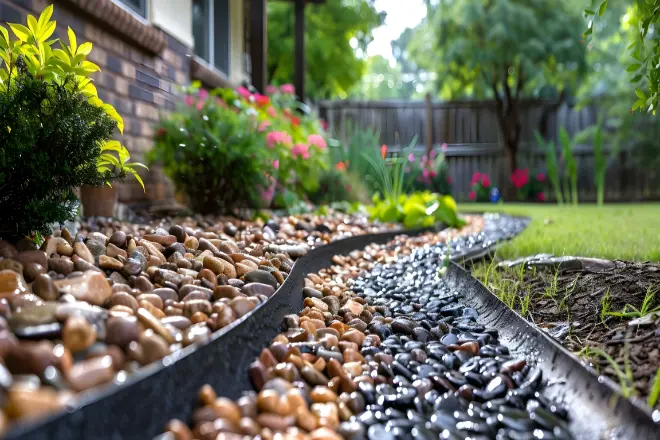
Gravel or permeable surfaces: helpful where drainage is critical or a casual look is desired.
-
Natural stone accents or mosaic inlays can define zones or focal points.
But the detail work matters as much as the selection. Joint spacing, edge restraints, drainage slopes (away from the house), flashing where patio meets building, expansion joints, and transitions to planting or steps must be handled cleanly to prevent failure.
Integration with Landscape & Vertical Elements
A patio that seems tacked on will never feel fully satisfying. Great patio design integrates with the surrounding garden, vegetation, and vertical elements. Ideas include:
-
Green screens, trellises, and vines to soften boundaries and frame views
-
Raised planters adjacent to edges or between zones
-
Pergolas, arbors, and shade sails to give structure overhead without fully closing the space
-
Lighting embedded in paving, steps, or vertical posts to unify patio and garden after dark
-
Layered planting and texture transitions so that the hardscape doesn’t feel harsh but is part of a continuum
When patio design treats the outdoor space holistically, the result is an outdoor “room” that feels intentional and comfortable.
Technology & Innovation in Modern Patio Design
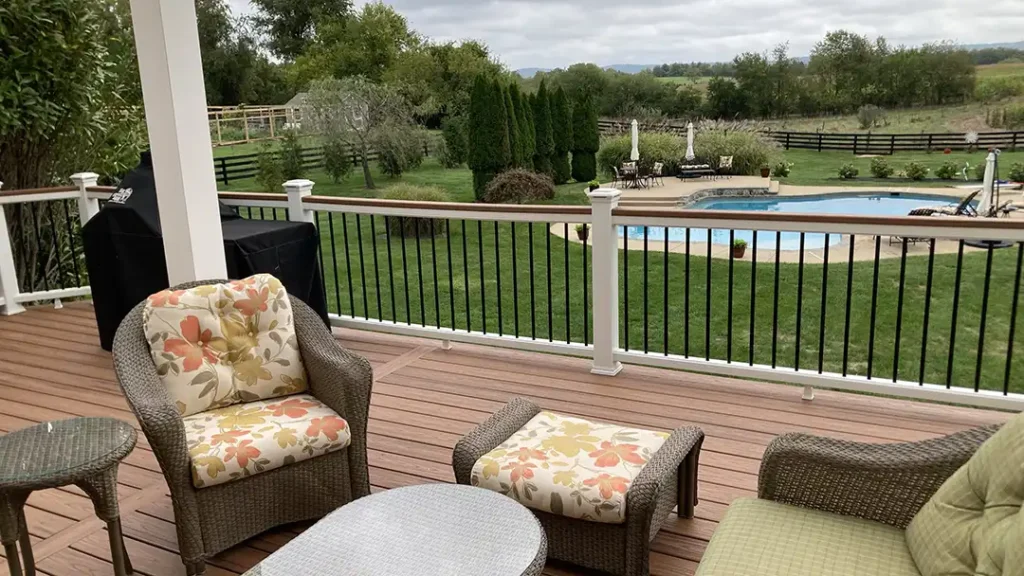
Patio design is evolving technologies and prefabricated systems are enabling more resilient, adaptive, and higher-performing outdoor spaces.
Smart Shade, Weather & Ambiance Control
One growing trend in patio design is the integration of smart shading systems—motorized pergola louvers, retractable awnings, or sliding screens that respond to sunlight, rain, or wind sensors. These systems protect the patio from harsh conditions automatically without requiring manual adjustments.
Lighting control is another area of innovation. Low-voltage or LED arrays embedded in the floor, steps, or vertical fixtures can be controlled via apps or automation, enabling dynamic ambiance shifts from bright for dining to dim for relaxation. Some systems also incorporate motion sensors or daylight sensors to adjust brightness.
Weather-responsive systems can retract covers or close screens when rain approaches, safeguarding furniture and extending use. This fusion of architecture and automation is pushing patio design into new territory, spaces that adapt to conditions rather than fighting them.
Modular & Prefab Systems
To streamline construction and allow flexibility, many modern patio designs use modular or prefabricated components. Prefab pergola kits, modular tile units, platform decks, integrated lighting modules, and plug-and-play conduit systems all reduce field labor and increase precision.
These systems support future adaptability: for example, a pergola module might come ready for shade louvers, future wiring, or sensor mounts. Modular pavers or tile systems allow panels to be swapped without disturbing adjacent elements. This flexibility is central to forward-looking patio design.
Visualization, Simulation & Testing
Designers now use 3D modeling, shadow studies, and augmented reality to preview how light plays across the patio during the day and seasons. This allows early decisions about shade depth, orientation, and planting interactions.
Testing is also more accessible on-site mockups or sample slabs let clients feel textures, see how color shifts under sun exposure, and evaluate comfort (heat, glare). These tools reduce surprises and enable better decision-making during implementation.
Exemplary Real-World Patio Designs & Ideas
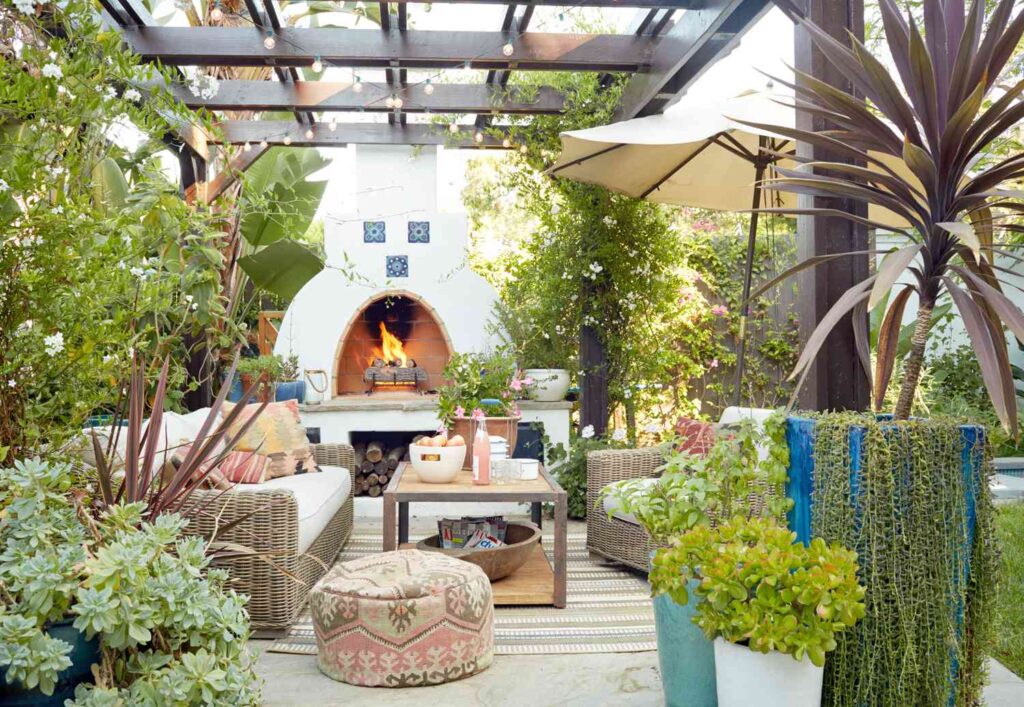
Below are three real-world patio examples or products that illustrate distinctive design ideas. Each is described in context and relates to core principles.
Outdoor Pergola Kit with Retractable Roof
A modular pergola system with motorized retractable fabric roofing demonstrates how patio design can balance openness and shelter. It allows the space to be open on fair days, and shaded or covered during intense sun or light rain. In climates with variable weather, such a pergola enhances usability without turning the patio into a fully enclosed room. The clean structural lines also suit modern aesthetics, bridging form and function.
Built-In Linear Fire Pit in Patio Slab
In many modern patio designs, a fire pit is not an afterthought but an integrated element. This example shows a linear fire pit flush with the paving, using gas feed lines hidden below. The fire pit becomes a focal edge, defining seating zones. Because it’s integrated at the design stage, circulation, heat clearance, and aesthetic alignment are resolved from the start. It reinforces how intentional patio design weaves hardscape and features seamlessly.
Folding Patio Dining Set with Slim Profile
This compact, foldable outdoor dining set is ideal as part of a flexible patio design. In small patios or multipurpose zones, furniture that folds or tucks away helps maximize flexibility. It contributes to the concept of zones that shift with us, open for gathering, compact when not needed, or rearranged for another function. Thoughtful patio design anticipates that furniture choice matters as much as paving and structure.
Each of these examples embodies a distinct dimension of patio design: shelter control, integrated focal features, and flexible furnishing. In your own design, you can mix such elements to suit climate, budget, and lifestyle.
Benefits & Practical Advantages
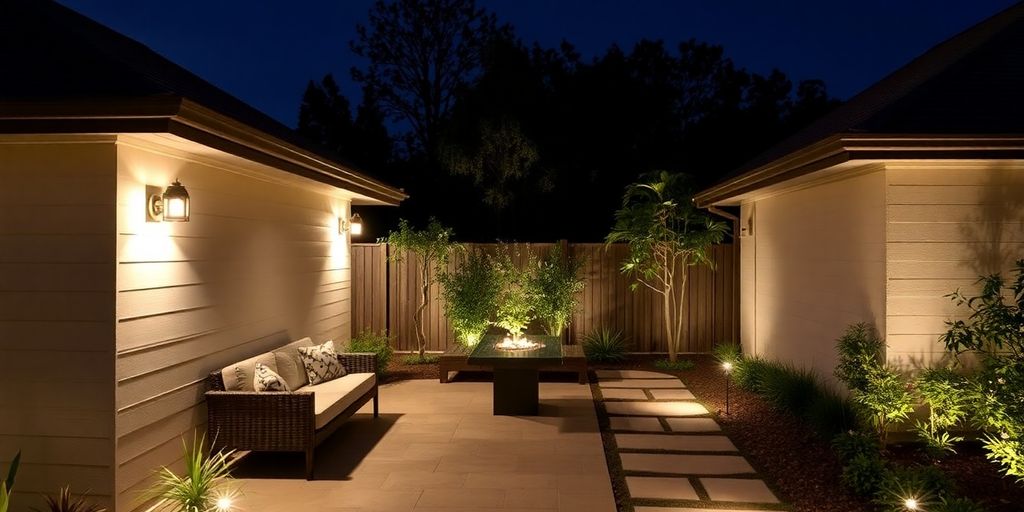
A well-executed patio design yields a range of practical and experiential benefits. Below are key advantages and how they manifest.
Outdoor Living & Lifestyle Enrichment
Patio design extends living into the outdoors. With comfortable zones for dining, lounging, reading, or entertaining, the patio becomes a functional “room” under the sky. When designed with comfort (shade, ventilation, lighting), people naturally spend more time outside, bridging interior and exterior life.
Increased Property Value & Market Appeal
A thoughtfully designed patio is more than decorative; it enhances the home’s usable square footage and appeals to prospective buyers. In markets that favor outdoor living, a patio with strong design, durable materials, and integrated features can become a selling point, boosting perceived value.
Climate Buffering & Thermal Benefit
Patios can help moderate heat gain to adjacent interiors. Proper orientation and shading reduce direct sun on walls and windows. Also, the thermal mass of paving can absorb or release heat, smoothing temperature swings. Overall, good patio design can contribute to energy efficiency for the whole home.
Durability & Low Maintenance
When patio design integrates suitable materials, proper drainage, joint detailing, and protective transitions, maintenance demands drop. Surfaces resist stains, fading, cracking, or water damage. Good design anticipates wear rather than reacting to failures.
Flexibility & Adaptability
A patio built with modular or flexible design forethought can adapt as needs change. You might start with a lounge and gradually add dining, cooking, or shade features. The framework remains modifiable without needing full demolition. This adaptability is a hallmark of intelligent patio design.
Environmental & Stormwater Benefits
Some patio designs incorporate permeable paving, infiltration zones, and integrated planting to reduce runoff and support local ecology. By blending hardscape and softscape, patios can be part of sustainable landscape strategies rather than imposing upon them.
Use Cases: Real Problems & Design-Driven Solutions
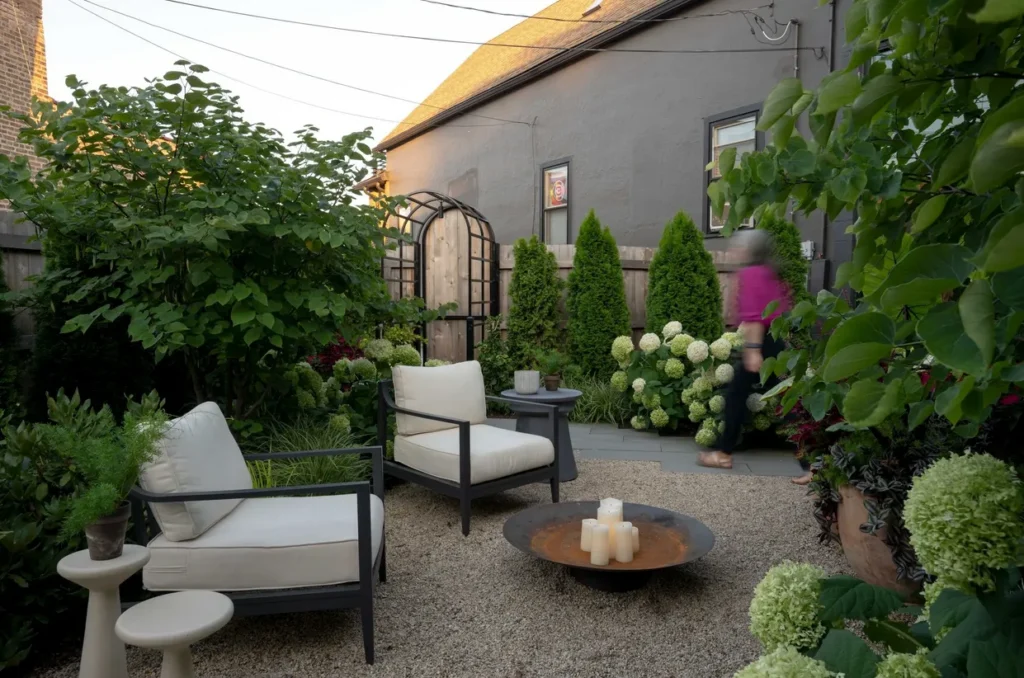
Below are practical scenarios and how good patio design solves them in real life.
Use Case 1: Small or Narrow Side Yard
Problem: Limited width restricts use, but you still want an outdoor zone.
Solution: Use linear layouts, compact furniture, fold-away seating, or narrow modular zones. Emphasize vertical elements, screens, and planters to soften edges. This patio design tactic helps turn narrow corridors into usable, pleasing outdoor areas without feeling cramped.
Use Case 2: Harsh Sun/Hot Climate
Problem: Intense sunlight, high heat, and glare reduce usability midday.
Solution: Integrate adjustable shading (retractable roofs, pergolas with motorized louvres), use light-reflective paving surfaces, orient furniture to avoid glare, and incorporate cooling features (fans, water misters). In patio design, the balance between openness and protection is crucial—so the space remains comfortable without feeling enclosed.
Use Case 3: Hosting & Entertaining
Problem: Need multiple zones (dining, lounging, circulation) without confusion or congestion.
Solution: Use modular zoning, consistent paving flows, strategic focal points (fire pits, planters), and flexible furniture. Emphasize wide, clear pathways and adjacency (e.g, kitchen access). A refined patio design supports fluid movement and encourages social interaction.
Use Case 4: Sloped or Uneven Site
Problem: Ground slope or elevation changes complicate creating a flat outdoor space.
Solution: Break into terraces, use retaining walls, steps, or raised platforms to create level zones. Align transitions so steps or grade changes feel intentional and integrated. With good patio design, slopes become an opportunity for layered visual interest, rather than a limitation.
Use Case 5: Variable Climate / Rain Exposure
Problem: Rain, wind, or seasonal extremes threaten usability and durability.
SolutionProtection design retractable covers, screened enclosures, drainage detailing, and materials suited to moisture exposure. Integrated weather sensors for retracting covers or closing screens add resilience. A robust patio design anticipates elemental exposure rather than just resisting it.
Frequently Asked Questions
Q1: What size should my patio be relative to my home?
There’s no one-size-fits-all, but aim to have at least enough room to comfortably fit your intended furniture with circulation space. A good target is that your patio should be at least 10–15% of usable interior space, adjusting upward if you host often or plan multiple zones. Always ensure there is comfortable clearance around furniture, no crowding.
Q2: How do I choose paving materials that last in my climate?
Select materials suited for your climate (heat tolerance, freeze-thaw cycles, humidity). Favor low-absorption surfaces (porcelain slabs, dense stone), UV-stable finishes, and non-slip textures. Test samples in sun and shade for color shift, water behavior, and comfort to step on barefoot. Also account for local maintenance conditions like moss or fungal growth in humid environments.
Q3: Can I design a patio that evolves
Absolutely. The best patio designs leave room for modular expansion: stub in conduits, anchor points for future pergolas, zones where furniture might shift, and modular paving systems. Start with core functions and progressively add features like cooking zones, lighting, planting, or weather control systems. This approach helps balance budget and ambition without compromising design integrity.